Translate 
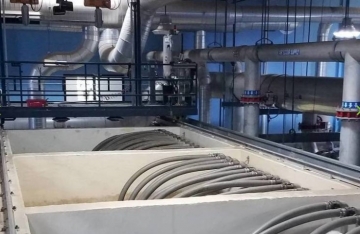
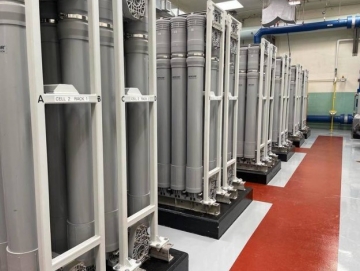
The city has unveiled a $36 million plan to make sweeping improvements to its water treatment plant and expand its membrane plant where water is filtered.
It will also embark on a $21 million project to replace some of the city’s water mains – most of which are more than 100 years old.
The City Council authorized the issuance of bonds or notes to finance the cost of the projects at the Feb. 15 meeting.
City Administrator Michael Drulis said the city will borrow the money for these projects through the Infrastructure Bank (I-Bank), a state-authorized agency that provides funding to municipalities at subsidized rates. Through the I-Bank, the city will pay 0% interest on half the money it borrows.
“So, because we go to the I-Bank, they work with the Department of Environmental Protection and they’re helping us finance the whole program, which is saving the city millions of dollars,” Drulis said.
The other half will be borrowed utilizing the state’s AAA bond rating, Drulis said.
The improvements to the water treatment plant, including a complete update of the treatment train, will allow for a more efficient approach to dealing with contaminants that are periodically updated by the Department of Environmental Protection.
The city will also begin to utilize ozone, an advanced oxidation technique and a powerful weapon in treating contaminants that are more difficult to break down.
Alexei Walus, the director of the city’s water utility, said the city will be able to treat 26 million gallons of water a day with the expanded membrane plant – with the potential to increase that capacity in the future.
The city draws its drinking water from the Westons Mill Pond, as well as the Delaware & Raritan Canal.
As far as the water distribution improvements, Walus said the city will replace portions of the approximately 100 miles of water mains – some of which were installed in the 1890s. He said not only the age of the mains is a concern, but some are undersized. Undersized mains could create water pressure issues for the fire department during emergencies.
He said the city will replace the mains while PSE&G conducts some upcoming milling and paving projects in areas such as Remsen Avenue.
The plan is to address some distribution projects that had been put aside a few years ago when revenue became uncertain during the COVID-19 pandemic, some that were budgeted for 2022, and some that have been identified for repair and replacement in 2023.
About $17.3 million of the $21 million will go toward replacing water mains, while the rest will go toward valves, equipment, electronic upgrades, vehicles, and tanks that secure the distribution system.
Drulis said the city’s application with the I-Bank is still pending, and the DEP is working on the final points before approving the project.
After freezing rates during the COVID-19 pandemic, the city raised water rates effective in the first billing to residents in January. The minimum bill for a one-person household was $126. That was raised to $137.
Story by: Chuck O'Donnell
Photo provided by: The City of New Brunswick
About NBCM | Admin Log-in | Privacy Policy | Terms of Use | Accessibility

New Brunswick City Market
P.O. Box 1101
New Brunswick, NJ 08903
Phone: 732-545-4849
citymarket@newbrunswick.com




©2026 New Brunswick City Market, all rights reserved. | A TownSight Website






-flag.jpg)


-flag.jpg)
