Translate 
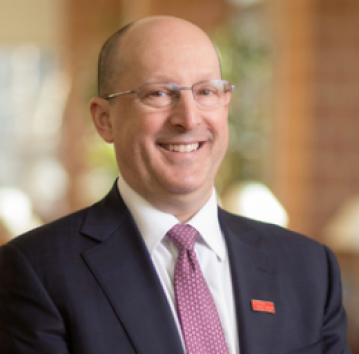
Dr. Steven Libutti said it was humbling to visit a 20-year-old college student a few weeks ago who is facing a gauntlet of therapies after being diagnosed with lymphoma.
Thirty-odd years ago, when Libutti was fresh out of medical school and ready to dedicate his life to unlocking the mysteries of cancer in the lab and bringing new treatments to the operating room, the young man’s diagnosis would have been, as he terms it, very unsure.
“But now this is a treatable, curable disease,” Libutti said. “And it’s treatable and curable because of the progress that’s been made at NCI-designated cancer centers like ours making discoveries in the lab, brought to the clinical trials and validated, and now have brought those new treatments to the patient, who now has an excellent chance of putting this completely behind them as just a speed bump in their journey.”
Libutti, one of TAPinto New Brunswick’s People to Watch in 2024, still clears time in his schedule for patients, even as he continues his administrative duties as the director of the Rutgers Cancer Institute of New Jersey and Senior Vice President of Oncology Services at RWJBarnabas Health.
It’s important because when the doctor/surgeon visits patients, it informs the decision-making of the administrator/steward of millions of dollars in resources.
It also helps him in the planning of the Jack and Sheryl Morris Cancer Center, a project that was in its embryonic stages when he arrived in New Brunswick in 2017.
Weekly meetings with other high-ranking members of the Cancer Institute have evolved from discussions about conceptual sketches and outlines to tons of concrete and steel rising 11 stories into New Brunswick’s skyline.
And although it is a move just across Somerset Street, it entails thousands of small details. For one thing, he’s going to be in the market starting in early 2024 to fill new administrator positions – or assembling the core team, as he put it.
Then, by the time the Morris Center opens its outpatient services in (perhaps) April 2025 and its inpatient services (hopefully) a few months later, hundreds of other staff members will need to be hired and on-boarded in units including infusion, radiation oncology, surgery, and more.
Libutti sees vast potential in consolidating the Cancer Institute’s many services under one $750 million roof.
“The opportunity to improve the process, to make things more efficient, to make the patient experience and how they navigate their way, whether they're getting outpatient care, inpatient care, or transitioning between the two, is much simpler and much more user-friendly,” he said.
“And so that's truly an opportunity as we look at the Morris Center, and it's something we've been planning for and training for the last three years. It's a process that's been going on as we're building the building, and it's a very choreographed transition that will happen as we're getting ready for the building to open.”
New Jersey’s foremost Cancer Warrior said his decision to dedicate his life to medicine was informed by watching too many “M*A*S*H” and “Marcus Welby, M.D.” reruns. It was also influenced by his grandmother’s fight with pancreatic cancer – a fight she lost nine months after being diagnosed.
“I think that made a big impact on me, sort of like, ‘Is there any way we can do better for patients?’ ” Libutti said.
As his career took him from the National Cancer Institute in Bethesda, Md., to the Montefiore Medical Center in New York to the Rutgers Cancer Institute of New Jersey, he maintained his interest in laboratory cancer research. The fact that so many advances have been made in breast and colon cancer treatments inspires him to continue his research.
He laid down his scalpel in 2020 or so after it became evident the scope of his administrative responsibilities wouldn’t allow time for surgery on patients with neuroendocrine tumors and other cancers.
Maintaining a small group of patients and navigating them to one of the surgeons on his team if they need an operation remains important to Libutti.
“I think being involved in patient care still keeps me on the front line, so to speak. I'm still engaged in the delivery of care and I think mostly it informs the decisions I make as an administrator,” he said. “It's nice not to always be in meetings and always need to be reviewing spreadsheets and metrics. It's nice to sit and chat with a patient, hear what's going on, review their history, go over their results of imaging and labs, and then make a diagnosis that might be able to fix a problem they're dealing with or allow them a better quality of life.”
Story By: Chuck O'Donnell
Photo Credit: TAPinto New Brunswick
About NBCM | Admin Log-in | Privacy Policy | Terms of Use | Accessibility

New Brunswick City Market
P.O. Box 1101
New Brunswick, NJ 08903
Phone: 732-545-4849
citymarket@newbrunswick.com




©2026 New Brunswick City Market, all rights reserved. | A TownSight Website






-flag.jpg)


-flag.jpg)
