
Translate 
A university-fueled downtown, serious arts scene, and global food make New Brunswick one of New Jersey's most distinctive and surprising cities.
New Brunswick is often summed up in a single phrase: the Rutgers college town. Spend a little time on its streets, though, and a more layered story emerges. This compact city on the Raritan River combines a walkable downtown, heavyweight arts institutions, cutting-edge medical and research campuses, and a food scene shaped by students and immigrants from around the world. Among New Jersey cities, few places pack as much culture and change into such a small footprint, which is exactly what makes New Brunswick stand out for travelers looking beyond the shore and the usual suburban day trips.
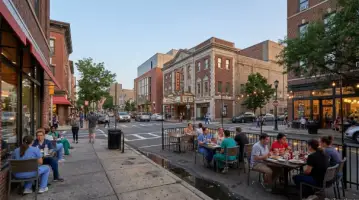
One of New Brunswick's biggest advantages over many New Jersey cities is simple but rare: it has a real, dense, walkable downtown. Step out of the New Brunswick train station, and you are effectively in the middle of town. Within a 10 to 15 minute walk, visitors can reach George Street's restaurants, the theaters of Civic Square, the Rutgers campus, and the Raritan riverfront. For travelers used to driving between strip malls, it feels like a different state.
George Street, in particular, concentrates on what makes the city feel urban. On a weekend evening, outdoor tables fill with diners at spots like Tavern on George, where pub food and craft cocktails draw both professionals and grad students, or Fat Cactus Mexican Cantina, known for Tex-Mex plates and frozen margaritas that keep the patio busy late into the night. Just a block or two away, smaller side streets hide coffee shops, barbers, and late-night pizza joints that stay open to capture the post-theater and post-bar crowd.
It also helps that New Brunswick is easy to reach without a car. The city sits on the Northeast Corridor rail line between New York City and Trenton, so travelers can board a New Jersey Transit train at New York Penn Station and step off in New Brunswick in about an hour, depending on the schedule. Buses from surrounding Middlesex County suburbs funnel people downtown for errands and nights out. For visitors already exploring urban New Jersey in places like Newark or Jersey City, New Brunswick feels like the logical inland counterpart: smaller, but with similarly tight streets, varied storefronts, and people on foot late into the evening.
That compactness means a short stay can still be rich. A day tripper can arrive by late morning, grab brunch near George Street, catch a matinee performance, wander the riverfront and campus, then head back after dinner without ever needing a rideshare. The mix of Rutgers students, hospital workers in scrubs grabbing coffee, and longtime residents running errands keeps the sidewalks interesting and gives travelers that sense of stepping into a living city rather than a manufactured entertainment district.
Rutgers University is New Brunswick's anchor, and you feel its presence everywhere. While the main academic buildings stretch across several campuses, the downtown area is closely tied to the university's professional schools and research centers, as well as the student-heavy neighborhoods that surround them. For visitors, this translates into a constant hum of events: lectures open to the public, art exhibitions, small performances, and home games that pour fans into downtown bars before and after tipoff or kickoff.
The city's future-facing edge is clearest around the emerging HELIX Health and Life Science Exchange. Rising in the heart of downtown, this multi-building innovation hub is designed as a cluster where university researchers, startups, and major healthcare players share lab and office space. Renderings and early descriptions emphasize glassy towers, flexible research floors, and common areas intended to host conferences and community programming. As phases come online, travelers can expect to see more visiting researchers, biotech meetups, and science-themed public events integrated into the downtown calendar.
For a travel experience, that innovation ecosystem offers an unusual angle on New Jersey. Instead of touring a historic mill complex converted to lofts, visitors can walk past active construction cranes building a medical and research district that includes Rutgers Robert Wood Johnson Medical School facilities and partnerships with institutions like RWJBarnabas Health. It is not hard to imagine a long weekend where a traveler spends one day immersed in classic theater and another attending a public science talk or health innovation expo hosted in these new spaces.
Rutgers also lends New Brunswick a diverse, international flavor. On College Avenue or Easton Avenue, you might pass a halal cart, a South Asian takeout counter advertising biryani specials, and a ramen shop full of students. That same diversity spills downtown, where it is easy to find a Dominican or Mexican lunch spot catering to both campus and local workers. It is this overlap of academy, industry, and everyday neighborhood life that sets New Brunswick apart from college towns that feel dominated by a single demographic.
For its size, New Brunswick has a remarkably dense cultural scene, anchored by institutions that draw audiences from across New Jersey. The State Theatre New Jersey, originally opened in 1921 as a grand movie palace, now functions as a nonprofit performing arts center and one of the state's most prominent stages. After a significant renovation, it regularly hosts touring Broadway productions, major concerts, and classic film screenings projected on a screen that spans dozens of feet across. It is the sort of venue more often associated with large cities, yet here it sits on Livingston Avenue, a short walk from campus and restaurants.
Right next door, the New Brunswick Performing Arts Center condenses multiple performance spaces, rehearsal studios, and residences into a modern complex. Resident companies range from the George Street Playhouse, known for staging new plays and thoughtful revivals, to Crossroads Theatre Company, a Tony Award-winning company focused on African American stories. On a given weekend, the building can host a world-premiere play, a dance performance, and a classical concert in its different theaters, giving visitors plenty of choices without leaving the block.
The arts ecosystem extends into Rutgers as well. Galleries and museums on campus, along with student-run theater companies and music ensembles, regularly put on public shows. During large annual events like Rutgers Day, the city feels like a festival ground, with outdoor performances and open houses drawing families from across the region. For travelers, this means planning a trip around a specific show is rewarding, but even unplanned visits often coincide with something interesting happening, whether a modern dance showcase at New Brunswick Performing Arts Center or a chamber concert advertised on a campus notice board.
What sets New Brunswick apart among New Jersey cities is that these arts venues are integrated into daily life. You can grab a pre-show drink at a gastropub on George Street, walk a few minutes to a professional-level theater performance, and stroll back out into a lively downtown instead of a quiet business district. It is a small-city version of the kind of arts-and-nightlife pairing that travelers often seek in larger metros.
For many travelers, New Brunswick's biggest surprise is how varied and lively the food scene feels relative to the city's size. Decades of immigration layered over the constant churn of hungry college students have created a dining landscape that ranges from white-tablecloth date spots to bare-bones taquerias, often within a few blocks of each other. That variety makes it easy to plan a full day of eating that never feels repetitive.
On the downtown side, Tavern on George exemplifies the modern American gastropub that New Brunswick does well. Diners settle into exposed-brick interiors or a patio when weather allows, ordering fish tacos, sliders, or a classic burger with a well-made cocktail or local draft beer. A few doors away, sports bars and ale houses fill with fans on game days, serving wings, nachos, and craft brews. Travelers on a budget can eat comfortably here, often finding happy hour food specials or brunch deals that keep the bill reasonable compared with nearby New York City.
At the same time, the city has no shortage of global flavors. Mexican restaurants line sections of French Street and surrounding blocks, serving tacos al pastor, tortas, and pozole to local families and visitors alike. It is easy to step into a place where menus feature both Spanish and English, with prices that still reflect neighborhood clientele more than tourist markups. Elsewhere in town, South Asian, Middle Eastern, and East Asian spots respond to the tastes of Rutgers' international student body. A traveler can start with empanadas at a small Latin American bakery, grab bubble tea in the afternoon, and end the day with shared plates at a modern small-plates restaurant.
New Brunswick's food cooperatives and markets add another dimension. The long-running George Street Co-op, just outside the core downtown, is known for natural and organic groceries as well as a vegetarian café. For visitors renting short-term apartments or staying with friends, it offers an easy way to stock up on local produce and bulk staples. Combined with the city's periodic farmers' markets and pop-up food festivals, the overall experience is of a city that takes eating seriously, whether you are grabbing late-night pizza or shopping for ingredients to cook your own meal.
At first glance, hospitals might not seem like a travel selling point. In New Brunswick, however, the concentration of major medical and research institutions shapes the city's identity and daily rhythm in ways that visitors feel. Robert Wood Johnson University Hospital, a flagship facility within the RWJBarnabas Health system, anchors a large medical district in the downtown area. Attached to and integrated with it is the Rutgers Cancer Institute of New Jersey, the state's only National Cancer Institute-designated Comprehensive Cancer Center, which means cutting-edge research and clinical trials take place just blocks from George Street.
In May 2025, a new freestanding cancer hospital opened in New Brunswick as part of this campus, creating a dedicated space for advanced oncology care. For many families traveling to the city, this cluster of facilities is the reason for their visit, as they accompany loved ones receiving treatment or consultations. The city's hotels, cafes, and short-term rentals have adapted to this reality, with many front desks accustomed to helping guests navigate between lodging and hospital buildings, or recommending quieter eateries where stressed families can decompress after a long day.
From a broader travel perspective, New Brunswick's role as a life-sciences hub makes it an interesting case study in how mid-size cities evolve. The HELIX project builds on this medical core by adding research labs, startup incubators, and educational spaces, effectively turning downtown blocks into a live-work-innovate district. Visitors walking along the edges of these developments can see clinicians in white coats sharing crosswalks with students lugging backpacks and office workers heading to lunch meetings, all within sight of theater marquees and restaurant patios.
Conference and medical tourism also bring waves of visitors to the city. Professional gatherings hosted by Rutgers or the hospital system frequently fill local hotels during weekdays, which in turn keeps restaurants and bars lively even when university students are away on break. For travelers combining business or medical trips with leisure, New Brunswick's compactness and cultural offerings make it relatively easy to turn a necessary visit into an opportunity to explore.
New Brunswick may be smaller than some of New Jersey's other urban centers, but it more than holds its own when it comes to seasonal festivals and nighttime energy. One of the most visible examples is the annual New Brunswick Heart Festival, a collaboration led by State Theatre New Jersey and the New Brunswick Cultural Center. Centered in the downtown arts district, the festival brings together live music, dance performances, family-friendly activities, and community organization booths. Streets close to traffic, stages go up, and what is normally a busy but contained corridor turns into a full-blown city party that draws residents from across Middlesex County.
On a smaller scale but more frequently, the city's nightlife keeps George Street and the surrounding blocks buzzing. Bars like Tavern on George and various ale houses host live music nights, trivia, and themed events that cater to both students and an older professional crowd. Some lounges on the strip double as event spaces, renting out for birthday parties and art shows one night, then reverting to cocktail bars the next. The variety allows travelers to pick their preferred atmosphere, whether that is a loud student hangout with cheap pitchers or a more laid-back bar with a solid whiskey list and small plates.
Comedy also plays a role in New Brunswick's after-dark identity. A downtown comedy club regularly draws touring stand-up acts, which pair naturally with the city's restaurant and bar offerings. Many visitors plan a night around a show, grabbing dinner on George Street, catching a stand-up set, and then lingering for a late drink. Because the venues are clustered together, it is easy to pivot if a place feels too crowded or the vibe is off, simply by walking a block or two to the next option.
Day or night, the presence of students gives the streets a casual energy. Weekdays might see undergraduates in Rutgers sweatshirts hurrying between buses and classrooms, while weekends bring families pushing strollers past outdoor diners and groups of friends hopping between brunch spots. For travelers coming from quieter bedroom communities, that mix of ages and purposes can be refreshing, offering a reminder that New Jersey's urban life extends well beyond its biggest cities.
New Brunswick stands out among New Jersey cities not because of any single attraction, but because of how many layers it stacks into a tight, walkable core. It is simultaneously a college town, a regional arts center, a medical and research hub, and a multicultural food destination. Visitors can arrive by train, drop their bags at a hotel, and spend a weekend moving on foot between a Broadway-caliber show, a street festival, a cutting-edge cancer pavilion, and a late-night plate of tacos or wings.
For travelers who already know the state's beaches and outlet malls, New Brunswick offers a different way to experience New Jersey: as a place of laboratories and lecture halls, small theaters premiering new plays, and neighborhoods where Dominican, Mexican, South Asian, and American college cultures coexist. Its skyline is still changing, with the HELIX towers and new hospital buildings rising alongside historic brick facades and classic theaters. That sense of an evolving city, combined with practical conveniences and genuine cultural depth, is what makes New Brunswick a compelling stop on any modern Garden State itinerary.
Article by: Socia Marquez, The Traveler
Photo Credit: The Traveler
About NBCM | Admin Log-in | Privacy Policy | Terms of Use | Accessibility

New Brunswick City Market
P.O. Box 1101
New Brunswick, NJ 08903
Phone: 732-545-4849
citymarket@newbrunswick.com




©2026 New Brunswick City Market, all rights reserved. | A TownSight Website






-flag.jpg)


-flag.jpg)
