
Translate 
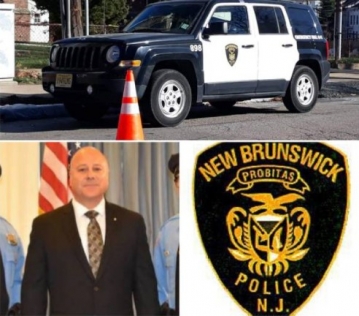
As part of standards and procedures that have been enacted throughout the years, the New Brunswick Police Department has been re-accredited, reaffirming the department’s adherence to the finest law enforcement standards in the nation.
Accreditation involves a set of 112 standards and 592 sub-standards set by the New Jersey State Association of Chiefs of Police, according to a press release from the city.
These standards address all aspects of police work, considered to be among the most rigorous for New Jersey law enforcement agencies.
Many of these standards have been in place in New Brunswick for decades. Yet, in 2012, the police department launched a voluntary review and revision of its policies, rules and regulations as part of this accreditation process, which called for the formal adoption of these standards and resulted in accreditation in 2013.
In previous years, city policies had already established a strict limit on “use of force,” ensuring a ban on chokeholds or strangleholds, as well as training on how best for police officers to de-escalate a situation through communication and distance. In instances when force is needed and when all other options are not feasible, the department requires comprehensive reporting.
Moreover, when an officer uses force of any kind, a report must be generated for the department’s Internal Affairs to review. In addition, the Police Department posts on its website a monthly Internal Affairs Unit report, providing the race, ethnicity, gender of an officer as well as a complainant, in addition to the number of incidents, the types of complaints and dispositions of those complaints.
The City also prohibits “racially-influenced policing,” a long-standing criminal justice issue that needs to be addressed by every law enforcement agency in every jurisdiction, New Brunswick Mayor Jim Cahill said.
“It is the sworn duty of every police officer to protect the civil rights of all persons and to safeguard their inalienable rights,” Cahill said. “If our officers were to rely upon a person’s race, ethnicity or gender when exercising law enforcement discretion, the result would be to undermine public confidence in the fairness and integrity of our entire criminal justice system.”
As part of the accreditation process, as well as the traditional policies of the New Brunswick police, all officers receive regular training in morals and ethics, bridging cultural barriers, the impact of bias, use of force, cultural diversity, racial profiling, stress management and “Verbal Judo,” the use of language to redirect a person’s behavior.
Community policing is another important way in which the New Brunswick police attempt to build relationships. For example, officers are regularly involved in the school district’s DARE program, as well as programs that focus on the danger of gangs, the role of police officers in the community and “Youth Restart,” a collaboration with Middlesex County to help juvenile offenders.
There are also numerous crime watch and crime prevention programs throughout the year to help build further bridges between police and residents.
“The department’s latest re-accreditation demonstrates that the New Brunswick police continue to adhere to the best practices in law enforcement,” said Director Anthony Caputo. “Our ongoing commitment to the accreditation process and the standards it represents, exemplifies the hard work and dedication our officers bring to the residents we serve every day.”
Story & Photo by: TAPinto New Brunswick

About NBCM | Admin Log-in | Privacy Policy | Terms of Use | Accessibility

New Brunswick City Market
P.O. Box 1101
New Brunswick, NJ 08903
Phone: 732-545-4849
citymarket@newbrunswick.com




©2026 New Brunswick City Market, all rights reserved. | A TownSight Website






-flag.jpg)


-flag.jpg)
